Puts vs. Calls: What’s the Difference? (Simple Beginner's Guide)
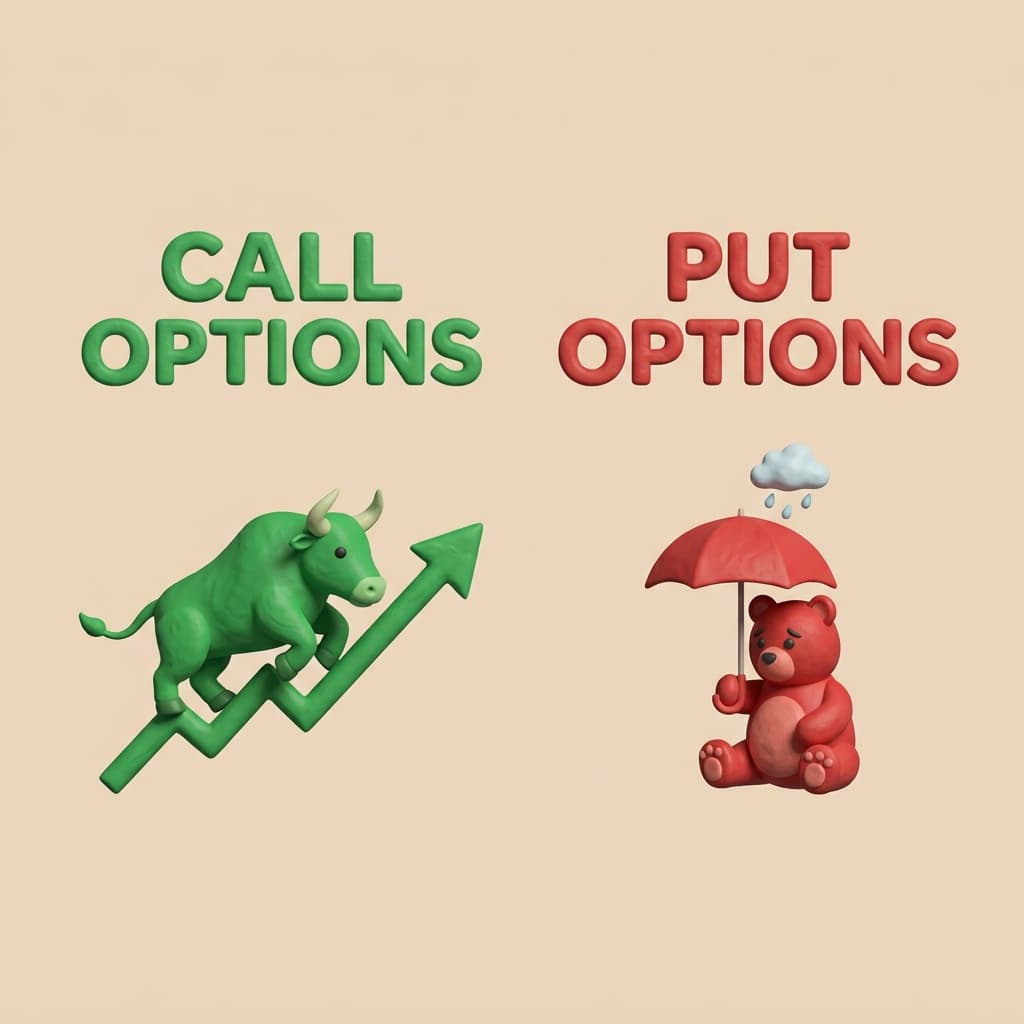
If you are just stepping into the world of options trading, the jargon can feel overwhelming. Greeks, strikes, expirations, and premiums are enough to make anyone's head spin.
But here is the secret: Every single options strategy in the world is built from just two basic building blocks—Calls and Puts.
Understanding the difference between puts vs calls is the absolute foundation of options trading. Whether you want to bet that a stock will go up, bet that it will crash, or simply insure your current portfolio, you need to know which of these two contracts to use.
Key Takeaways
- ✓A Call Option gives you the right to buy a stock at a specific price. You buy a call when you are bullish (you think the stock will go up).
- ✓A Put Option gives you the right to sell a stock at a specific price. You buy a put when you are bearish (you think the stock will go down) or want to insure your shares.
- ✓Both contracts have an expiration date. If the stock doesn't move in your favor by that date, the option expires worthless.
- ✓One contract controls exactly 100 shares of the underlying stock.
What is a Call Option?
A Call Option is a contract that gives you the right (but not the obligation) to buy 100 shares of a stock at an agreed-upon price, on or before a specific date.
Traders buy calls when they are "bullish." They believe the stock price is going to rise significantly.
Think of a Call Option like putting a deposit down on a house. Let's say you find a house for $300,000, but you need a month to get your cash together. You pay the seller a $5,000 non-refundable fee to lock in that $300,000 price for 30 days.
- If the housing market explodes and the house is suddenly worth $400,000, you still get to buy it for $300,000! You made a brilliant move.
- If the house value drops to $200,000, you simply walk away. You don't buy the house, and you only lose your $5,000 deposit.
Real-World Example: Buying an Apple (AAPL) Call
Let's say Apple is currently trading at $150. You think their new product announcement next week will cause the stock to surge. Instead of spending $15,000 to buy 100 actual shares, you buy 1 Call Option with a "Strike Price" of $155, expiring in two weeks. This option costs you $200 (the premium).
If Apple skyrockets to $180, your Call option gives you the right to buy those shares for only $155. You instantly make a massive profit. If Apple's stock crashes instead, the most you can ever lose is the $200 you paid for the option.
Interactive Call Option Simulator
Drag the sliders below to build your own trade. Watch how your profit, loss, and ROI change in real time — or pick a preset scenario to get started instantly.
What is a Put Option?
A Put Option is a contract that gives you the right (but not the obligation) to sell 100 shares of a stock at an agreed-upon price, on or before a specific date.
Traders buy puts for two reasons: they are "bearish" (they want to profit from a stock crashing), or they want to buy insurance for stocks they already own.
Think of a Put Option exactly like car insurance. You pay Geico a small monthly premium to insure your $20,000 car.
- If you crash the car and total it (the value drops to $0), Geico is obligated to buy it from you / reimburse you for the $20,000 agreed-upon value.
- If you don't crash the car, your insurance simply expires at the end of the month, and you lose the small premium you paid.
Real-World Example: Buying a Tesla (TSLA) Put
Let's say Tesla is trading at $200. You believe their upcoming earnings report is going to be terrible and the stock will plummet. You buy 1 Put Option with a Strike Price of $190, expiring in one month, and it costs you $300.
If Tesla crashes to $150, your Put Option gives you the right to sell shares at $190. You can sell something for $190 that is currently only worth $150 on the open market! Your $300 option will now be worth thousands.
Puts vs Calls: Side-by-Side Comparison
| Feature | Call Option | Put Option |
|---|---|---|
| The Right To... | BUY 100 shares | SELL 100 shares |
| Market Outlook | Bullish (You want it to go UP) | Bearish (You want it to go DOWN) |
| Max Loss (Buyer) | The premium paid | The premium paid |
| Max Profit | Theoretically unlimited | Substantial (Stock can only drop to $0) |
| Real-World Equivalent | A real estate deposit | An insurance policy |
The Next Step: Buying vs. Selling
Right now, we have only talked about buying puts and calls. But remember, for every buyer, there has to be a seller.
When you buy a Call or Put, you are paying a premium to limit your risk. But advanced traders often act like the "insurance company" by selling those options to collect the premium upfront.
To learn how to execute these trades on your brokerage app, and how to safely navigate creating new option contracts, check out our complete guide on Sell to Open vs Sell to Close.
Frequently Asked Questions
Ready to Track the Smart Money?
Follow where institutions, hedge funds, politicians, and market makers are investing and copy their winning trades with PolyTICK.