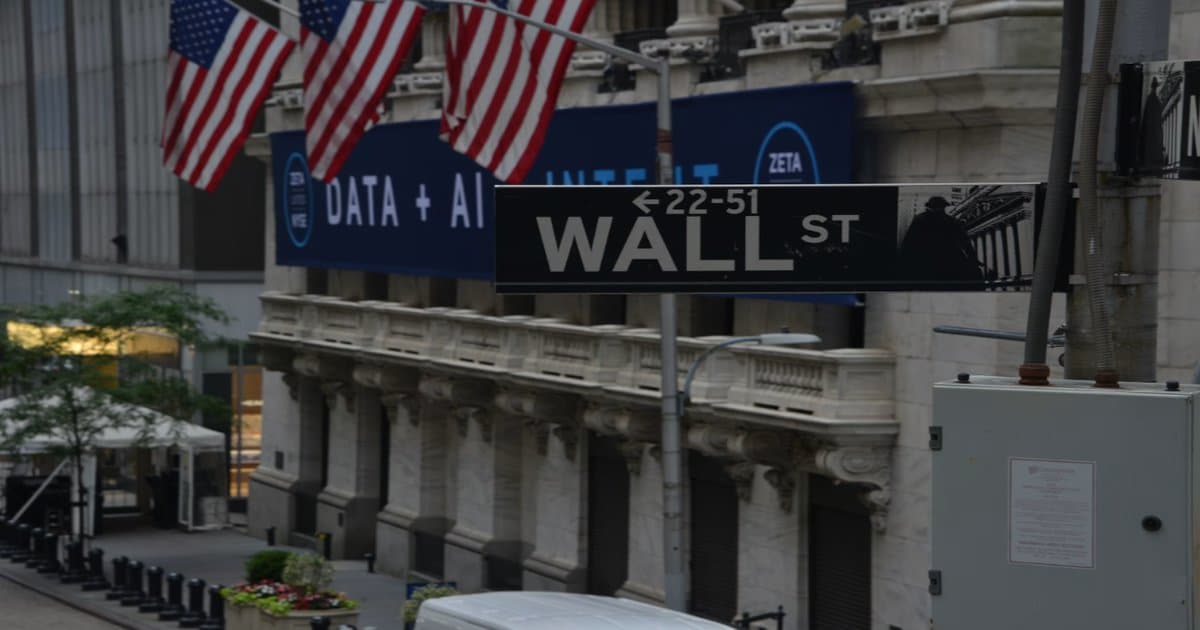
Wall Street is nervous — and for once, the data backs it up.
After a strong multi-year run driven largely by AI euphoria, the stock market is now facing a rare convergence of warning signals. Not one or two indicators showing strain, but seven measurable, historically validated signals — all elevated at the same time, for the first time since the peak of the dot-com bubble in 2000.
This isn't a prediction. Markets can stay irrational longer than most people expect. But understanding what these signals mean, and how past cycles played out, may be the most important financial reading you do before summer.
The Big Picture: What Analysts Are Watching Right Now
"The U.S. economy has the traditional markers of being late in the business cycle — unemployment is low, inflation remains above target, and credit spreads are tight," says Dan Buckley, chief analyst at DayTrading.com. "Leadership is also concentrated, which limits some of the traditional diversification associated with indices. This is generally the point when equities struggle to make further gains."
Market positioning data confirms the anxiety. According to Jonathan Squires, CEO at Tapaas, a market trader surveillance firm, retail traders with long positions on the Nasdaq have dropped from a trailing six-month average of 56% to just 39%. When you look at positioning by dollar value — where the larger, more sophisticated money sits — bullish sentiment falls even further, to 28%.
"Big money is significantly more bearish than the crowd, which is already bearish," Squires says.
Here is what is driving that caution.
1. The Shiller CAPE Ratio Is at Its Second-Highest Level in 140 Years
The Cyclically Adjusted Price-to-Earnings (CAPE) ratio, developed by Nobel laureate Robert Shiller, averages inflation-adjusted earnings over 10 years to smooth out short-term noise. It is one of the most reliable long-term valuation tools available — and right now it is flashing red.
That is more than double the long-run average. In 140 years of data, this level has only been exceeded once: at the peak of the dot-com bubble in 1999–2000, when the ratio hit 44.2x before the S&P 500 fell 49% over two years.
The CAPE has risen above 24 only six times since 1871. The first five each preceded a major market downturn — including 1929 (the Great Depression) and 2008 (the Great Recession). The sixth is happening right now.
A high CAPE does not mean a crash is imminent. But historically, elevated CAPE readings have strongly implied poor forward returns over the next decade.
2. The Buffett Indicator Is in "Playing With Fire" Territory
Warren Buffett has called his preferred valuation gauge — total U.S. stock market capitalization divided by GDP — "probably the best single measure of where valuations stand at any given moment."
In a 2001 Fortune essay written after the dot-com crash, Buffett noted that when his indicator approached 200%, investors were "playing with fire." The S&P 500 had already fallen over 20% by the time he wrote that, and ultimately fell roughly 50% from its peak.
Today the indicator sits about one-sixth above that threshold, at approximately 229% — 2.1 standard deviations above the historical average, and approaching the all-time record near 235%.
At this level, the indicator projects average annual returns of approximately -0.9% over the next 8 years.
As Fortune's Shawn Tully noted in April 2026: "Buffett's thesis does not predict when the market swings back into balance, just that it will eventually, and when it does all investors will feel the pain."
3. The 30-Year Treasury Yield Has Hit an 18-Year High
Long-term U.S. Treasury yields now sit at 5.2% — an 18-year high, against a pre-pandemic average of roughly 3%. The driver is largely oil-driven inflation pressure, which is also tied to ongoing U.S.-Iran negotiation uncertainty.
Why does this matter for stocks? Two compounding mechanisms:
When a risk-free bond yields 5.2%, equity investors require higher returns to justify the additional risk — which forces stock prices lower relative to earnings.
Companies that loaded up on cheap debt during the zero-rate era are now rolling that debt at dramatically higher rates. This squeezes margins and reduces earnings power across every leveraged sector.
"If inflation rises, real yields generally rise, which compresses equity multiples," Buckley notes. "The mix of macro factors might suggest more neutral policy or even slightly tighter policy, depending on how strict the central bank is about hitting 2% inflation."
4. Consumer Debt Has Hit a Record $18.8 Trillion
Total U.S. household debt reached $18.8 trillion in Q1 2026 — a new record. The more troubling signal is beneath the headline number: credit card delinquencies of 90+ days have reached 13.1%, a 15-year high.
The American consumer drives approximately 68–70% of U.S. GDP. When consumer spending cracks, corporate earnings follow. A consumer running on maxed-out credit, rising minimum payments, and tightening lending standards is a consumer who slows down.
Florida-based real estate analyst Alexei Morgado says from his sector's vantage point, the risks that worry him most include inflation, employment, and consumer confidence — "because people often delay large purchases when feeling pressured. They'll avoid buying a house, car, investing and remodeling."
With April CPI at 3.8% year-over-year and the Fed maintaining a "higher for longer" rate stance, the squeeze on consumer purchasing power is ongoing.
5. The Midterm Election Seasonal Pattern: 93.75% Hit Rate Since 1962
Most investors focus on presidential election years. But the pattern that has proven far more reliable plays out one year later — in midterm election years.
The S&P 500 has fallen from May to October in 15 out of the last 16 midterm election years since 1962. That is a 93.75% hit rate. For context, most quantitative trading strategies are considered strong at 60%.
Craig Kirsner, president of Kirsner Wealth Management, says he "100% believes" there will be a stock market downturn starting in July 2026 and lasting until October or November, driven primarily by the four-year midterm election cycle.
"Typically, around July of each four-year midterm election cycle, the market heads down due to uncertainty around the upcoming election," Kirsner says. "The markets don't like uncertainty, which is why historically this is usually what happens."
He adds that the rebound since the March 2026 downturn — nearly vertical — sets up the other half of the dynamic: "The market is like a rubber band. It gets stretched out, then comes ripping back in the other direction."
The good news embedded in this pattern: once the election passes, the S&P 500 has historically rallied — what Kirsner calls the "thankfully it's over" rally.
6. The $3 Trillion IPO Supply Shock
The largest IPO pipeline in history is forming. SpaceX (~$900B valuation) has filed with a listing targeted for June 12. OpenAI (~$134B) has no S-1 filed yet but an IPO in the 2026–2027 window is widely anticipated. Combined with dozens of other names, the pipeline represents over $3 trillion in new equity supply.
The historical pattern here is uncomfortable. Mega-IPO clusters have consistently arrived at — not before — market peaks.
| Year | Event | Outcome |
|---|---|---|
| 1999 | Dot-com IPO rush | S&P -49% over 2 years |
| 2007 | Blackstone IPO | S&P -57% by March 2009 |
| 2012 | Facebook IPO | Minor pullback — OK |
| 2019 | Uber, Lyft, WeWork | COVID crash 6 months later |
| 2021 | Rivian, Coinbase, SPACs | Nasdaq -35% in 2022 |
| 2025 | CoreWeave, Figma, Klarna | Most IPOs down from highs |
| 2026 | SpaceX, OpenAI | ? |
4 out of the last 5 mega-IPO years preceded significant corrections. SpaceX is currently priced at a 97x price-to-revenue multiple — historically rich, leaving little margin for error if sentiment shifts.
The mechanism is straightforward: $3T+ of new equity paper hitting the market crowds out liquidity. The dollars needed to absorb these offerings have to come from somewhere.
7. Institutional Investors Are De-Risking in Size
Q1 2026 13F filings — verified SEC disclosures — reveal a broad, simultaneous de-risking wave among some of the world's most sophisticated investors:
- Greg Abel (Berkshire Hathaway) trimmed the portfolio from 40 positions to 26, fully exiting Amazon, UnitedHealth, and Domino's while cutting Chevron and Bank of America.
- Bill Ackman (Pershing Square) sold approximately 95% of his Google position across both share classes — effectively a full exit.
- Chris Hohn (TCI Fund Management) sold down an $8 billion Microsoft position from 10% of the portfolio to roughly 1%, explicitly citing AI disruption risk to Microsoft's core software business.
- Daniel Loeb (Third Point Capital) fully exited Microsoft and PG&E, reduced Nvidia by over 93%, cut Union Pacific by over 94%, and exited 20 positions total during the quarter.
On the S&P 500, Squires notes, "39% of traders are long by count but only 24% by value — meaning larger players are considerably more pessimistic than smaller ones. That kind of split tends to resolve in the direction the big money is pointing."
The Dow tells an even sharper story: retail long positioning collapsed from 61% to 30% in just two weeks between May 11 and May 25, 2026.
Is This Time Different? The AI Argument
Every cycle produces a "this time is different" argument — and this one has a real basis. Generative AI could eventually help companies cut labor costs throughout the economy, sustainably boosting long-term profit margins. AI infrastructure companies like Nvidia look much cheaper on forward earnings than their CAPE-heavy backward-looking valuations suggest.
But the counterargument is sobering. Deutsche Bank analysts estimate that OpenAI alone could lose a total of $140 billion between 2024 and 2029. If the companies consuming AI infrastructure start running low on capital, the infrastructure providers face slowing growth with expensive, hard-to-monetize assets.
As the Motley Fool's analysis notes: "Profits are now 12% of GDP versus a historic average of 7–8%. In our highly competitive economy, fat margins attract competitors seeking a share of the action. Extraordinary earnings growth generally doesn't stay extraordinary."
What Happens to Stocks in a Recession?
Not as badly as most people fear — on average.
According to historical data, the S&P 500 has actually produced positive returns during 7 of the 13 recessions since 1945, gaining an average of 3.68% during recession periods. The stock market is forward-looking; it often prices in a recession before it officially begins, and begins recovering before the recession ends.
That said, the range of outcomes is wide:
- The 2020 COVID recession: -34% peak-to-trough, recovered within months
- The 2008–2009 Great Recession: -57% peak-to-trough, took years to recover
- The 2000–2002 dot-com bust: -49%, nearly a decade to recover in real terms
The depth depends on how the financial system is implicated and how quickly policy can respond. In 2008, the housing market and banking system were the core of the problem — which is why it was so severe and prolonged. Today's risk profile is different: the excess is concentrated in equity valuations and consumer debt rather than banking leverage. That matters for how a correction might play out.
How to Protect Your Portfolio Now
No single indicator predicts a crash, and no one can time the market reliably. But there are prudent adjustments to consider when multiple long-cycle signals align at extremes.
Utilities, consumer staples, and healthcare have historically held up better during downturns. Cyclical sectors — discretionary retail, travel, speculative tech — tend to fall hardest.
Holding a higher-than-usual cash allocation reduces the emotional pressure to sell during volatility, and gives you the ability to buy at better valuations if a correction occurs.
As Kirsner Wealth Management notes, the pattern following midterm election uncertainty is typically a strong "thankfully it's over" rally into year-end. Wholesale exit means missing that recovery.
"Volatility usually brings correlation," says David Russell, global head of market strategy at TradeStation Group. "Investors might benefit from taking a step back and focusing on the bigger indexes instead of individual stocks."
"Don't sell everything as soon as you see some bad news," says Kevin Marshall, a certified public accountant and market analyst. "The most common mistake is that people sell when the market falls, then buy only when it rises. A big amount of money is really lost that way."
If you don't have 3–6 months of emergency savings, or you're carrying high-rate credit card debt, those are higher priorities than repositioning a portfolio. The same logic that makes markets vulnerable — stretched consumers — applies to individual households.
Frequently Asked Questions
Is the stock market going to crash in 2026?
No one can predict a crash with certainty. What can be said is that the current combination of signals — CAPE at 41.3x, Buffett Indicator at 229%, record consumer debt at $18.8T, 18-year-high Treasury yields, a $3T+ IPO pipeline, and a midterm seasonal pattern with a 93.75% historical hit rate — represents a level of simultaneous risk concentration not seen since 2000. The probability of a meaningful correction is elevated. Whether it becomes a full crash depends on how external shocks (Iran conflict, Fed policy, AI earnings delivery) resolve.
Is a recession coming in 2026?
Leading indicators are more tilted toward recession risk than at almost any point in recent years. Consumer credit delinquencies at 15-year highs, record household debt, compressed margins from high rates, and slowing job creation (115,000 jobs added in April, unemployment at 4.3%) all point to a slowing economy. Whether the slowdown tips into an official recession — two consecutive quarters of negative GDP — remains uncertain. Most analysts expect a meaningful growth slowdown; the tail risk is a hard contraction.
What is the CAPE ratio and is it too high right now?
The Shiller CAPE (Cyclically Adjusted Price-to-Earnings) ratio averages inflation-adjusted S&P 500 earnings over 10 years to eliminate short-term noise. Its historical average is 17.3x. Today it sits at approximately 41x — more than double the long-run average and the second highest reading in 140 years of data. By any historical standard, it is significantly elevated.
What is the historical average CAPE ratio?
The long-run average for the Shiller CAPE ratio is approximately 17.3x. The current reading of roughly 41x is more than double that. The only prior comparable readings were at the 1929 pre-Depression peak (32.6x) and the dot-com peak in 2000 (44.2x).
Has the stock market reached a record high?
Yes. The S&P 500 rebounded to near all-time highs following the March 2026 downturn, reaching approximately 7,165. This sharp, nearly vertical recovery — after the Iran war-driven sell-off — is part of what analysts like Kirsner mean when they describe the "rubber band" dynamic that historically precedes a summer reversal in midterm years.
Who owns most of the stock market?
The wealthiest 10% of Americans own approximately 93% of all stocks, according to Federal Reserve data. This concentration means market gains and losses are felt disproportionately at the top of the wealth distribution. However, because roughly half of American households hold equities through 401(k)s, IRAs, and pension funds, broad market downturns still significantly affect middle-class retirement savings.
What is the 7% rule in stocks?
The 7% rule is a risk management discipline popularized by IBD founder William O'Neil: cut any losing stock position once it falls 7–8% below your purchase price, without exception. The goal is to prevent small, manageable losses from compounding into catastrophic ones. It is a trading rule, not an investing philosophy, but it is widely referenced by active traders as a form of capital preservation.
What happens to stocks in a recession?
Historically, stocks have performed better during recessions than most people expect. The S&P 500 produced positive returns in 7 of the 13 recessions since 1945, gaining an average of 3.68% during those periods. However, outcomes vary enormously: the 2020 COVID recession saw a 34% drawdown before a rapid recovery, while the 2008–2009 Great Recession saw a 57% decline that took years to repair. Defensive sectors — utilities, consumer staples, healthcare — tend to hold up best. High-multiple growth stocks and consumer cyclicals tend to fall hardest.
Should I sell everything before a market crash?
Generally, no. Trying to time market exits and re-entries consistently is extremely difficult, and the cost of being wrong is high — missing even the 10 best trading days in a decade can cut long-term returns by half. A more prudent approach is to rebalance toward defensive positions, maintain cash reserves for opportunities, and avoid excessive concentration in the most speculative areas of the market. As every recession since 1945 has eventually been followed by a recovery, long-term investors who held through downturns have historically been rewarded.
The Bottom Line
Markets rarely crash on a single signal. They crack when multiple supports give way at once — valuations stretched, consumers tapped out, smart money already positioned defensively, and a triggering event (an oil shock, a failed IPO, a geopolitical surprise) that tips sentiment.
Right now, six of those seven conditions are already in place. The triggering event remains unknown.
Craig Kirsner, who manages client portfolios with one eye on these cycles, puts it simply: his firm is going more defensive early, then waiting for the October–November bottom signal to get back in. The historical pattern, he notes, usually ends with a strong year-end rally once the election uncertainty clears.
The investors who avoided the worst of 2000, 2008, and 2022 were not the ones who predicted the exact day of the peak. They were the ones who respected what the data was telling them — and acted before the crowd did.
This article is for informational and educational purposes only. It does not constitute financial or investment advice. Past market patterns do not guarantee future results. Always consult a qualified financial advisor before making investment decisions.
Want to Track the Next Big Trade Before It Moves?
PolyTICK monitors political stock trades in real time, including executive office disclosures, and cross-references them with committee seats, legislative calendars, institutional positioning, analyst targets, and real-time AI analysis of congressional hearings.
We provide the most comprehensive, institutional-grade political intelligence dashboard on the market. Get full access today for just $14.99 per month, which is a fraction of what legacy services charge.